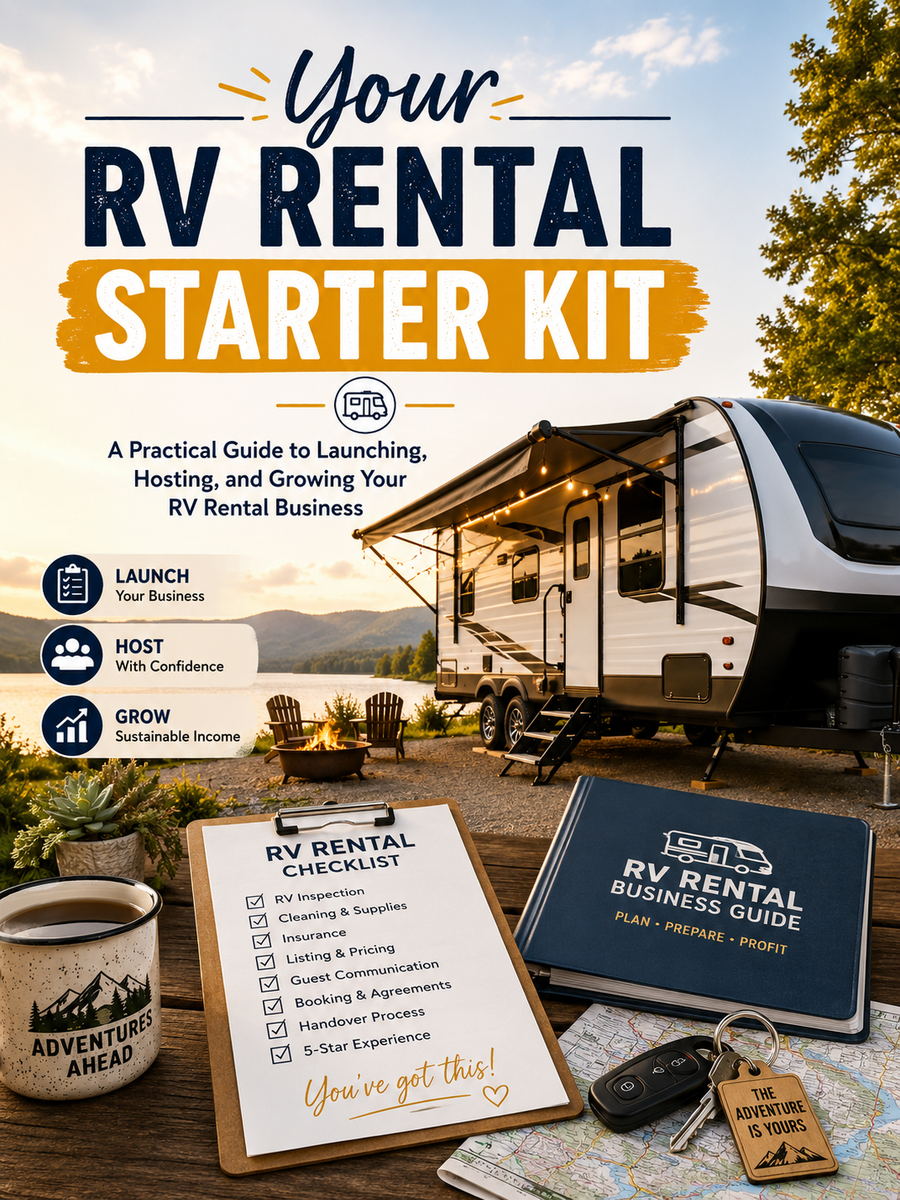
A Practical Guide to Launching, Hosting, and Growing Your RV Rental Business
Your RV Rental Starter Kit
Some owners rent because they want a side business. Some rent because the payment is getting heavy and they need a practical way to keep the vehicle. And with more families choosing local trips, weekend getaways, campground stays, and staycations when the economy feels tight, a clean, well-run RV can meet a real demand without asking guests to fly across the country.
Think of it like a boat sitting in storage. You love the idea of owning it, but every month it costs money whether you use it or not. Renting does not make the responsibility disappear, but it can turn idle months into useful revenue if you approach it like a small operations business.
Start with the honest question: can you emotionally handle your RV coming back different? A renter may be careful and still create small scratches, smells, loose hinges, or shifted cabinets. An RV is a house in a constant earthquake. That mindset matters because it keeps you from treating normal rental wear like a personal insult.
The upside is real. Rental income can help offset storage, insurance, depreciation, repairs, and loan payments. The tradeoff is also real. You will answer messages, coordinate pickups, clean after guests, manage reviews, track expenses, inspect damage, and occasionally handle stressful disputes. If that sounds unbearable, renting may not be the right model. If that sounds manageable, this guide will help you build the business carefully.
Before you list, write down your personal rules: when your RV is available, how far guests can travel, who can drive, whether pets are allowed, how cleaning works, and what kind of renters you want to serve. Clear rules now prevent messy conversations later.
Important: this ebook is educational only. It is not legal, insurance, tax, or financial advice. Before renting your RV, speak with the appropriate licensed professionals and verify current platform rules directly.