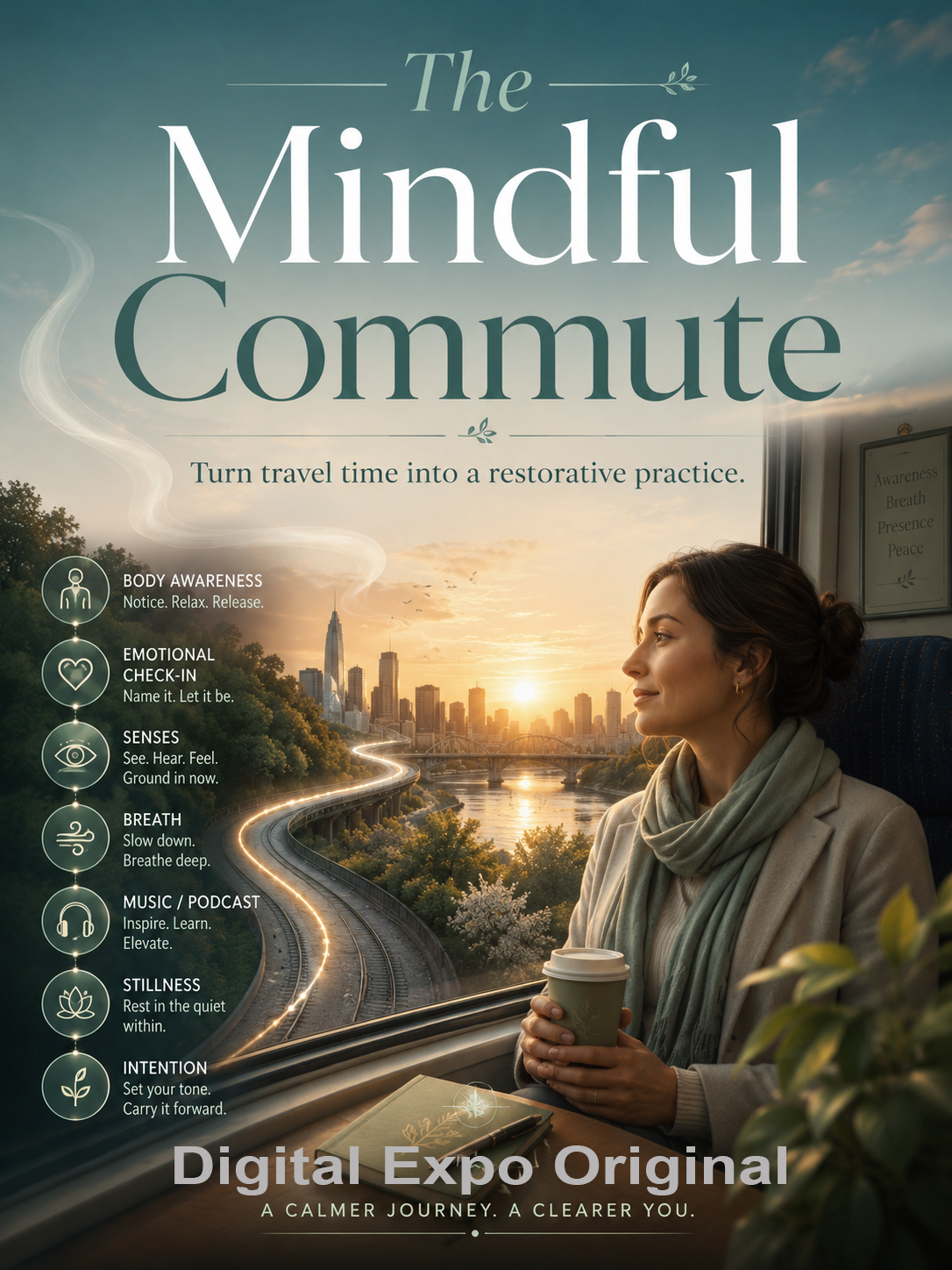
The Difference Between Rest and Avoidance
Knowing the difference between rest and avoidance is essential for using your commute well. Avoidance brushes stress aside with temporary distractions—the endless Instagram scroll—which only postpones it. Rest replenishes your energy: mindful breathing, or letting your mind wander freely without a task. Identifying what genuinely refreshes you on the way to and from work changes how you feel when you arrive.
A Simple End-of-Week Check-In
Measure what your commute costs you with a Friday check-in. Notice how your body feels and where it holds tension. Note your emotional state—irritable or calm. Then consider your senses: did the commute overwhelm or soothe them? Charting these answers shows you where to focus when you start turning your commute into a restorative practice.
Next, see how to turn the journey itself from transit into practice.
Chapter 2: The Shift from Transit to Practice
The Practice of a 30-Minute Commute
Bringing "practice" into your commute doesn't require extra time. Thirty minutes is enough to turn a routine trip into something restorative. Practice means intentional focus on an activity that supports your wellbeing—listening deeply to a piece of music, breathing deliberately, or sitting with stillness.
The Two-Question Reset
Before you step out, ask: "What do I need?" Calm? Energy? Solitude? Then ask: "What can this trip give me?" Relaxation, a podcast that teaches you something, a mindful look at your surroundings. These two questions focus your commute on what actually serves you.